I build & manage unique hotels with the highest returns in hospitality. Learn how to grow your vision and go from commodity STRs to boutique hotels.
Build your demand engine (or build the OTAs' database)
|
Modern Hospitality Playbook: The three-part system that got us there. We wrapped the first live session of the Modern Hospitality Accelerator last week. 45 operators in the room. Boutique hotels, glamping resorts, cabin portfolios, group-buyout estates, pre-launch builds. Different markets and stages. Every surface problem looked different. After two hours, one thing was impossible to miss. Every operator had built the hard part. The property, the design, the operations, the guest experience. What almost none of them had fully built was a demand engine. THE WRONG WAY The default move is to list on the OTAs and wait. And it works, for a while. OTAs drive bookings. The problem is what they take in return. Fifteen to twenty-five percent on every booking, no guest data, no relationship, and no way to reach that guest again next year. And because the OTA puts your property next to fifty others, pricing pressure never stops. You drop $10. The property down the road drops $15. By peak season, you’ve filled the calendar at rates you swore you’d never accept, and the margin you needed to reinvest is gone. The guest didn’t pick you. They picked a date and a price range, and you happened to fit. This is the math most operators haven’t done. When you own your demand, that changes entirely. Someone sees your reel, follows you, and books you months later having already decided you’re the one. They’re not comparison shopping. They’re bought into your story before they arrive. That’s a fundamentally different business. The same property, a different asset. THE PLAY The demand engine has three parts. Part 1: Create demand. Positioning and content. The first question to answer: who, specifically, is your guest? From there, every reel should answer three things:
Those answers have to live in the first few seconds of every reel, not buried in the caption. Most operators are posting properties. The ones at 80%+ direct are posting identities. (The difference shows up in your booking window and your average rate, not just your follower count.) Part 2: Capture demand. Turn interest into bookings. A website and booking engine built to convert visitors into guests. Attribution that actually tells you what’s working. (Google Analytics reported 2% of our revenue from organic social. Our post-booking guest survey showed 50 to 60% of guests found us through social media. Those are not the same number.) And a nurture sequence for the 60 to 120 days between when someone discovers you and when they’re ready to book. Part 3: Optimize demand. Price against real-time signals, not just seasonal defaults. When a reel picks up traction, raise your rates before the wave hits. For slow periods, OTA promotions drive the effective rate guests see lower, filling the calendar without touching your public direct rate. The goal is price parity across channels at all times. OTA discounts are the lever for low-demand days, not a signal to drop your direct price to match. Dynamic pricing software is a rate-publishing tool. The strategy is yours to manage. Most operators have one or two pieces. Few have all three working together. And the gap between “a few pieces” and “a full system” is where most of the margin lives. THE PROOF
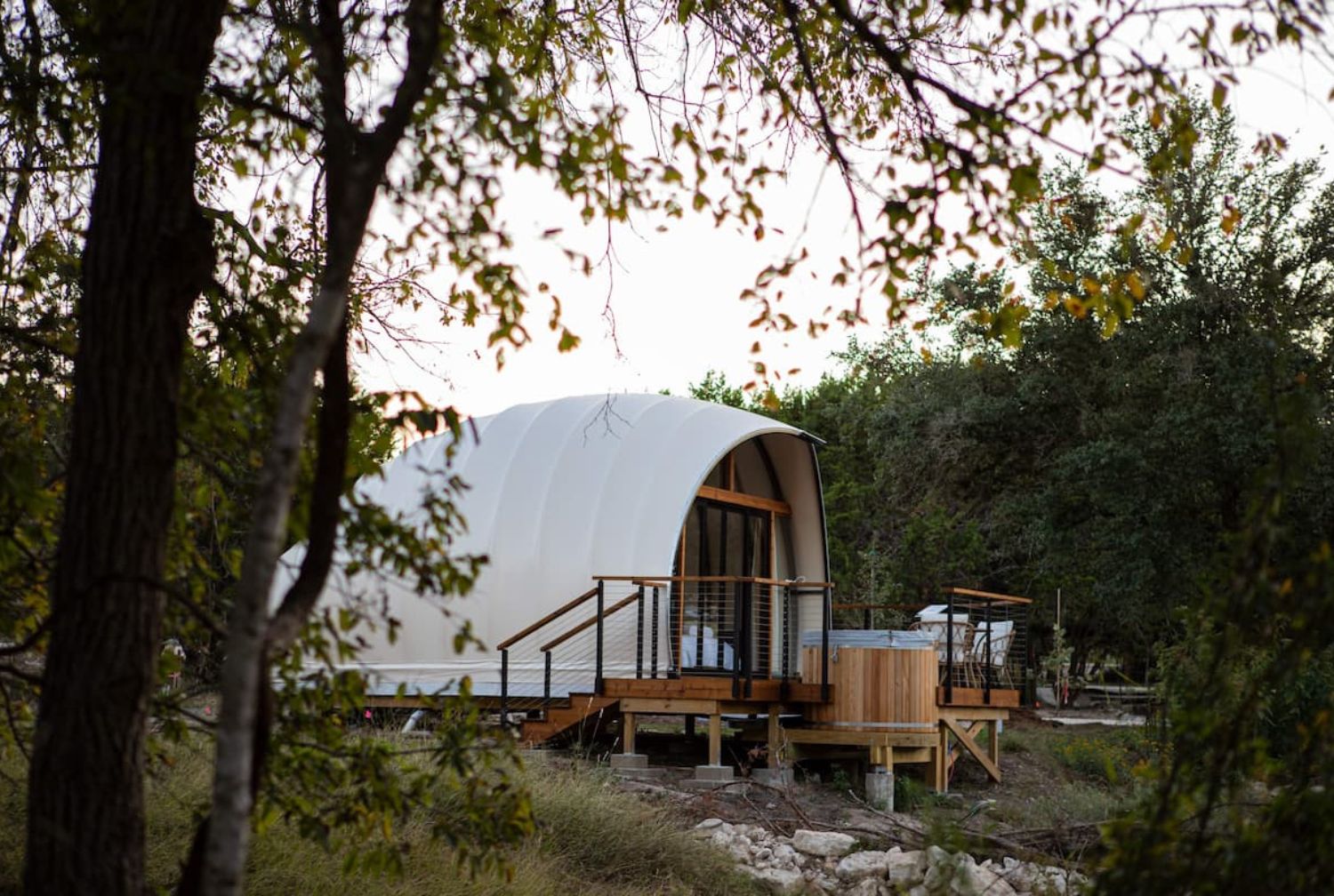
At Onera Fredericksburg, we opened in November 2021 with zero Instagram followers, no direct booking website, and a hundred percent OTA dependency. February 2022: first influencer collab. Two posts, two weeks. $30,000 in direct bookings. We leaned into influencer marketing through 2022 and hit 30 to 35% direct. Then we built the in-house content team. By the end of 2023, we were at 75% direct. By 2024, consistently 80%+. In 2022, we sold that property to a public REIT for $7 million. Eight keys, almost a million dollars per key. We kept the brand. At Onera Wimberley today: 85% direct bookings, 24% higher ADR on direct versus OTA bookings, $500+ average nightly rate.
That’s in a market that has seen heavy new supply come in over the last two years. The demand engine is what makes the rate stick. THE TAKEAWAY You’ve built the hard part.
The property, the design, the operations, the experience.
The demand engine is what determines what all of it is worth.
This is your window to build it before the gap widens.
Ben |

Ben Wolff | The Unique Stays Guy
I build & manage unique hotels with the highest returns in hospitality. Learn how to grow your vision and go from commodity STRs to boutique hotels.
Which pricing strategy should you use? Option A: Manually set your rate and leave it. Option B: Use a dynamic pricing tool to adjust your rates automatically based on the market. Now, this is a bit of a trick question because the right answer I'm looking for is… You should be working towards a Custom Revenue Management System. Why? If you manually set your rate, you’d better hope you can time the market right. Otherwise, you’ll probably end up: Pricing too low and maxing occupancy (with a...
Over the past few weeks, we've begun sitting down with Accelerator members to look back at their first five months with us. Across the board, one lesson keeps coming up: Pricing. More specifically… How to price so that ADR goes up and occupancy goes up with it How to set prices when you don't have a booking history to lean on So today, I want to walk you through one member who figured it out. They opened five cabins in April, in a North Carolina mountain town most travelers haven't heard of,...
Before this week's episode: Slow season gets decided 60 to 120 days out. Most hotels are still solving it 30 days out, cutting rates alongside everyone else. My Baya co-founder Steve, Katarina Glejtkova (our Director of Revenue Management at Oasi) and I are running a free 90-minute workshop on Zoom on how to price early, and stop joining your competitors in a race to the bottom. Join us on October 7 Wednesdsay at 1PM EST. Save your seat here. Hey, Ben here! Edwin, Zach and I kept landing on...