I build & manage unique hotels with the highest returns in hospitality. Learn how to grow your vision and go from commodity STRs to boutique hotels.
How to price every date for what it's actually worth
|
Modern Hospitality Playbook: Last week you found the leak. This week we plug the bigger half of it. Last newsletter, I walked you through a pricing autopsy.
If you ran it, you probably landed where our cohort did. The empty nights were the bigger leak. That issue was about finding the money. This one is about going and getting it. Here's why the empty-night leak hides so well. An empty night doesn't send you an alert. Underpricing at least leaves a receipt. You can look back and see the night you sold for $250 when you could have held $400. An empty night just disappears. No booking, no record, no number to make you wince. When we audited the first operators through the module, that invisible leak came back larger than the underpricing one every time. Jeremy, the operator we featured last week, runs a rustic campground on 80 acres in Michigan's Upper Peninsula, on an old quarry site above Lake Superior. He's 100% direct, zero OTAs, on a flat $45 rate while a city-run campground nearby books out at $35. His empty-night opportunity came back larger than his entire season's revenue. And here's what should worry you. Another operator nearly tripled (!!) his empty-night number just by correcting one input: his occupancy assumption. Most operators guess low, so the real leak is bigger than the first pass shows. (More on this one in next week's newsletter 😉). THE WRONG WAYWhen the calendar looks soft, most operators reach for one of two moves.
Both moves share the same root problem. They price every date the same, when your dates are not the same. (These are the two traps that drain revenue at any key count.) Take the campground. A Thursday in July booked 74 times. A Wednesday in June booked 20. Both sat at $45. That flat $45 was too low for the July Thursday, so he gave away margin on a night that would have sold anyway. And it was too high for the June Wednesday, so nights that could have sold at the right price sat empty instead. The empty nights are the expensive half. A booking at a low rate still earns you something. A night that never sells earns nothing (and it never shows up on a report to remind you it happened). THE PLAYThere's a play we run on soft dates called the Pink Line. (I broke down the full strategy a few weeks back.) Here's how we actually find where to run it. Step 1: Find your genuinely soft dates. Open AirDNA and go straight to the seasonality calendar. Ignore its pricing recommendations, they're skewed for unique stays. The heat map is the gold, because it reads every operator in your market, strong and weak, so a low date there is a real low date. The lightest squares are your Pink Line candidates. Step 2: Check your comps on those exact dates. Pull up Airbnb or Booking for those specific soft nights and find your best comparable, the property closest to yours on amenities, not the cheapest listing in the market. Sit 5% below it. Now you're the most attractive option on the precise dates demand is thin. Step 3: Set it early and hold. Lock your floor (your BATNA, the number from your real costs) 120+ days out, before the comp set starts panic-dropping, then check once a week. If the bottom moves, you move. Otherwise you hold. Why being cheaper makes more:
You make $82 more per night by filling the calendar. Now run it in reverse on your strong dates. Push the rate until a night doesn't sell. Book at $75, try $80, and if $80 doesn't move, you've found your ceiling. If you never miss, you never learn how high the market will actually pay, which means you're leaving money on every strong date. So a miss here is worth more than the booking. The number it teaches you prices every similar date for years. A word of caution: Apply the Pink Line only the dates that are genuinely soft. If you raised rates and bookings are still coming, that's demand talking. Push up, not down. THE PROOF
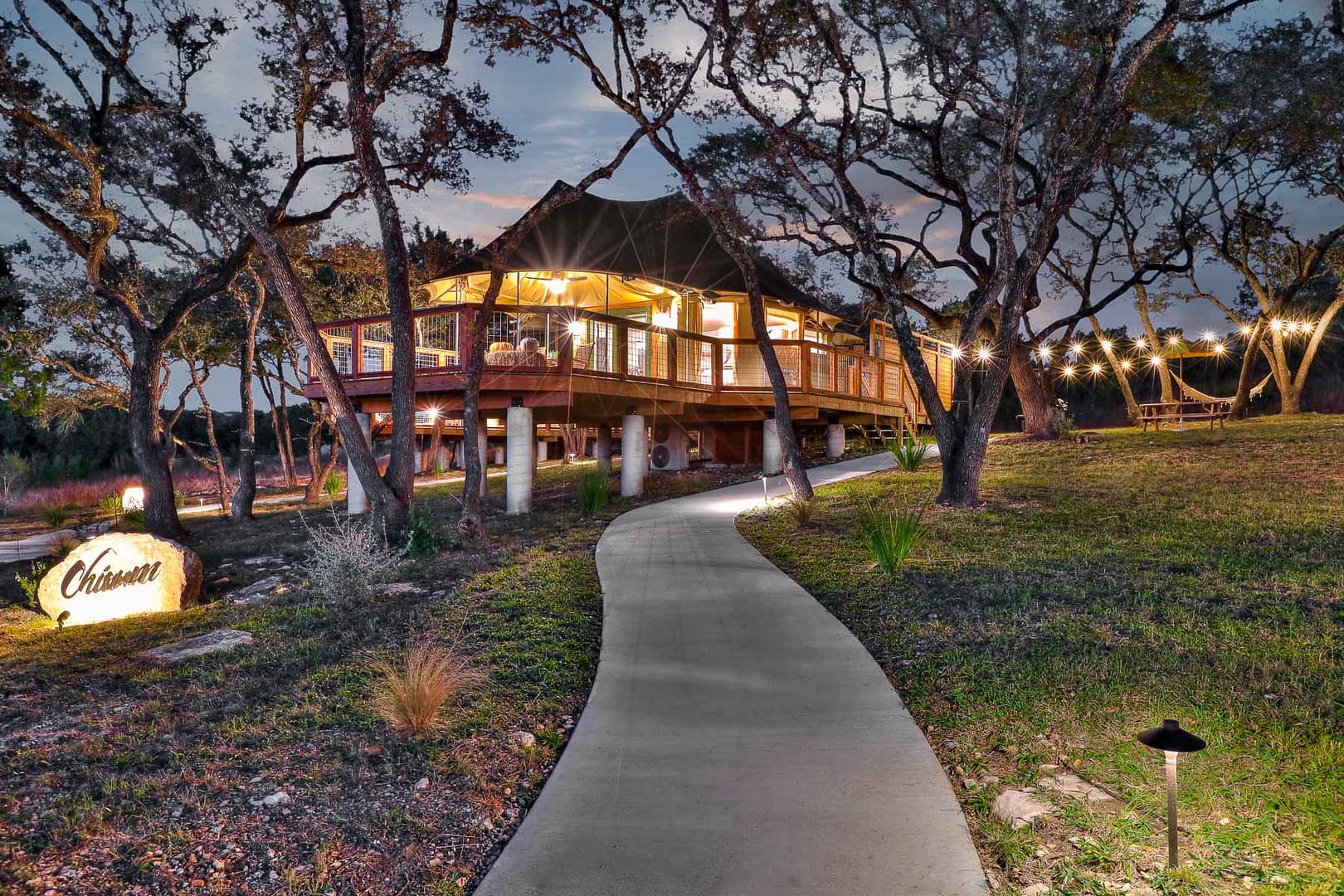
Spoon Mountain is a three-cabin property in the Texas Hill Country. Small key count, so every pricing decision carries weight.
Up 94%, same three cabins. The slowest month grew 64%. Same property. Different pricing. THE TAKEAWAYThis week, open the seasonality map and mark your softest dates for the next 120 days. Pink Line those, 5% under your best comparable. Then push your strongest dates up until you miss. Charging less on the right nights and more on the rest is the whole game. This is your window to set it before the season locks in. -- Ben Founder, Oasi & Modern Hospitality Accelerator P.S. When's your next soft stretch, and how many empty nights did it cost you last year? Hit reply with a rough number. I'm collecting these as we go through the revenue series, and your answers shape what I cover next. P.P.S. Everything above only works once you have your own booking history. So what do you do when the property is brand new and there's no history to pull? That's part three. I'm bringing in an operator opening a property from scratch, and we'll build his seasonality and comp set in AirDNA from zero to find his starting rate. Keep an eye out for next week's newsletter. |
Ben Wolff | The Unique Stays Guy
I build & manage unique hotels with the highest returns in hospitality. Learn how to grow your vision and go from commodity STRs to boutique hotels.
Quick note before we get into it: I'm hosting a live workshop tomorrow, October 1st at 1:00 PM EST on The Slow Season Pricing Playbook: How To Price With AirDNA Adapt. In just 90 minutes, we’ll show you how to build a competitive comp set and price strategically against your closest competitors. Click here to add this workshop to your calendar (and we’ll send you the replay - even if you can’t make it live). Last Thursday, I was catching up with a friend who’s attending VRMA 26 in Nashville...
Hey, Ben here! This week Scott, Edwin, Zach and I spent the whole episode on one question. Who actually owns the guest? We talk about how the top players in hospitality are either fighting to capture more of your guests, or admitting they can't fake it anymore. Airbnb's hotel program just crossed 4,000 properties, growing 3x faster than Airbnb's core home business. Uber's playing the same game from a different angle. It's becoming a new booking layer for Expedia's hotel supply, using 50...
According to Lodging Econometrics, 2,371 new hotels opened in 2025. 2,617 more are expected in 2026. And most of those are going to do one thing right before they open their doors: list themselves on OTAs Which means… You'll be seeing a flood of competitors right next to your property, fighting for the same customers. And some of these hotels have bigger budgets and even institutional capital behind them. But that's not the worst part. It's this: OTAs will keep charging you the same...