I build & manage unique hotels with the highest returns in hospitality. Learn how to grow your vision and go from commodity STRs to boutique hotels.
trials reels 101
|
Modern Hospitality Playbook: How to test reels on completely cold audiences before anything touches your main grid (and the two numbers that keep you posting). I often hear you guys say that the hard part of content isn't the footage. You've got the clip: a hot tub looking out at the mountains with the sunrise coming up behind it. Then you sit there and your brain goes blank on what to text to put across it. I feel you. Finding the words is the easy half. The blank page happens because each post feeling permanent. You feel that every reel or carousel should be perfect. When I started my personal account, there were months I felt like I was fumbling in the dark. What got me out of it was finding somewhere to post where it was okay to test things and make mistakes. For a long time, operators treated the main Instagram grid like a portfolioThey post consistently to the main grid, they read the analytics, then adjust. That's good practice, but it's still a slow way to learn:
The grid keeps score. That's what makes operators slow, and slow is what costs them bookings. Unless there’s somewhere to post where nobody is counting… Introducing Trial ReelsLet me pull back the curtain on Trial Reels, because it's simpler than most people expect. When you go to post a reel, there's a toggle that sends it to trials instead of your main feed. That's the whole setup. Your followers never see it. Instagram pushes it to non-followers only, so you're getting a clean read from a completely cold audience. That's the part that matters. If a reel does well in trials, it's a good piece of content, regardless of who already follows you. Here’s what you do: Open the app and you get the analytics: skip rate, dropoff rate, like rate, share rate. Here's how to run it: Step 1: Pick two numbers.
3 variations and 1 winner to promote is a fine place to start. Step 2: Put everything through trials first. My guess? The one you laboured over all afternoon will flop, and the two-minute throwaway will perform well. Wait 48 hours before declaring a winner. Step 3: Move your best one over, even on a bad week. For a new account, bump the highest number you got. Then once you know your average, anything that beats it earns gets promoted. Step 4: Find the topic underneath the win. One reel doing well could be a blip, but a topic that does well twice is a direction. That's when you go make five more of it, using the same topic-first process behind a 2M-view reel. One last thing, because it trips people up: Give a “flop” at least 48 hours before you write it off. Instagram keeps re-testing trial reels while it works out who your page is for, so plenty of them pick up long after you've moved on. We've been testing this way across the portfolio for years, and it pays
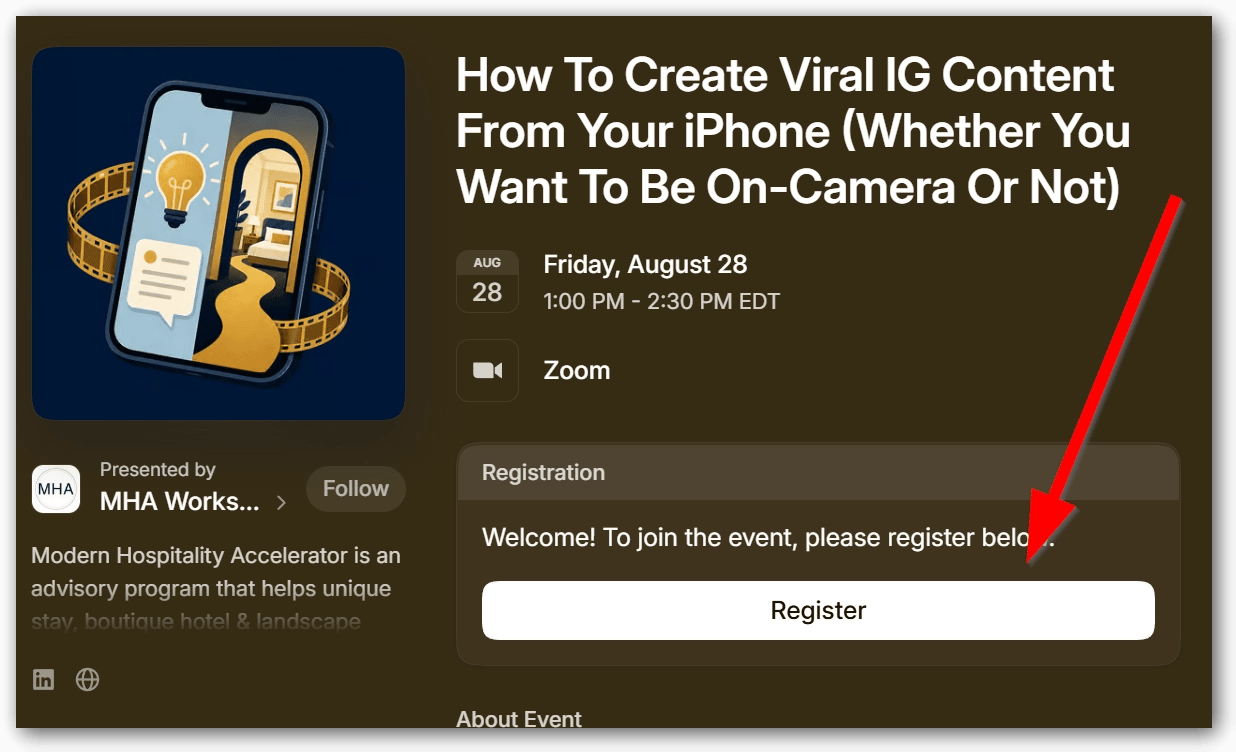
Every one of those went out the door as a trial reel. We just made the guessing cheaper, and kept it off the main grid until it worked. Pick your two numbers this week: 3 to trials, 1 to the grid.Post the three you're least sure about, because those are the ones with something to teach you. Your audience will tell you what they want faster than you can guess it, as long as you keep giving them something to react to. -- Ben Wolff P.S. Next Friday, August 28th at 1pm Eastern, I'm running a free 90-minute workshop with my friend Isaac French. We're breaking down the two Instagram reel formats we're both leaning on right now, and how to shoot them on your phone whether or not you want to be on camera. Everyone who joins live walks away with our Educational Reel Copywriter GPT, plus two vaults breaking down 10 educational reels and 10 walk-through reels with links to the live posts.
|
Ben Wolff | The Unique Stays Guy
I build & manage unique hotels with the highest returns in hospitality. Learn how to grow your vision and go from commodity STRs to boutique hotels.
Which pricing strategy should you use? Option A: Manually set your rate and leave it. Option B: Use a dynamic pricing tool to adjust your rates automatically based on the market. Now, this is a bit of a trick question because the right answer I'm looking for is… You should be working towards a Custom Revenue Management System. Why? If you manually set your rate, you’d better hope you can time the market right. Otherwise, you’ll probably end up: Pricing too low and maxing occupancy (with a...
Over the past few weeks, we've begun sitting down with Accelerator members to look back at their first five months with us. Across the board, one lesson keeps coming up: Pricing. More specifically… How to price so that ADR goes up and occupancy goes up with it How to set prices when you don't have a booking history to lean on So today, I want to walk you through one member who figured it out. They opened five cabins in April, in a North Carolina mountain town most travelers haven't heard of,...
Before this week's episode: Slow season gets decided 60 to 120 days out. Most hotels are still solving it 30 days out, cutting rates alongside everyone else. My Baya co-founder Steve, Katarina Glejtkova (our Director of Revenue Management at Oasi) and I are running a free 90-minute workshop on Zoom on how to price early, and stop joining your competitors in a race to the bottom. Join us on October 7 Wednesdsay at 1PM EST. Save your seat here. Hey, Ben here! Edwin, Zach and I kept landing on...